iDeemlawful
  • News
  • Commentaries
  • Education
  • CourtRoom
  • Tech
  • Career
  • Lifestyle
  • World
iDeemlawful
  • News
  • Commentaries
  • Education
  • CourtRoom
  • Tech
  • Career
  • Lifestyle
  • World
iDeemlawful
iDeemlawful
  • About
  • Advertise
  • Editorial
  • Support

Copyright 2021 - All Right Reserved. Designed and Developed by PenciDesign

Tag:

Globacom

Business

Subscribers get New Ultimatum to Reclaim Airtime on Deactivated Lines

ideemlawful profile1iDeemlawful April 9, 2025
ideemlawful profile1iDeemlawful

The Executive Vice Chairman/CEO of the NCC, Dr Aminu Maida, who was represented by the Executive Commissioner for Stakeholder Management, Rimini Makama, said the initiative is part of efforts to balance consumer rights with operational realities in the telecommunications sector.

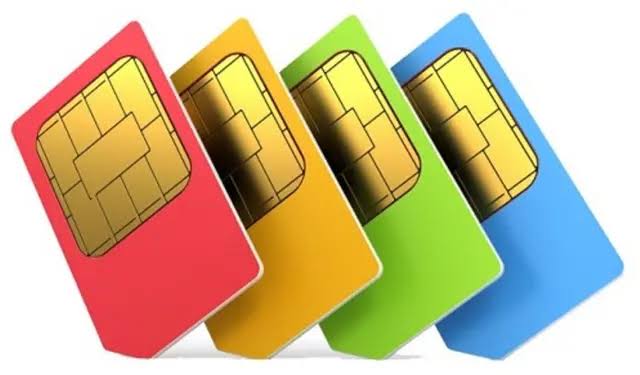
The Nigerian Communications Commission has proposed a 12-month grace period for subscribers to reclaim unused airtime on deactivated lines.

The proposal was disclosed during a virtual stakeholder engagement forum held in Abuja on Tuesday.

Maida said the telecommunications industry has played a significant role in driving economic growth, financial inclusion, and digital transformation in Nigeria.

According to him, the prevalence of mobile services and the flexibility offered by prepaid plans have benefitted millions of Nigerians.

However, with the evolving landscape, it has become necessary to address emerging challenges that could undermine consumer rights.

He explained that the proposed framework seeks to address the issue of unclaimed recharges when accounts become inactive.

Maida noted that the Quality-of-Service Business Rules 2024 stipulates that a prepaid line without a revenue-generating event for six months must be deactivated.

If the inactivity continues for another six months, the line may be recycled.

He stated that under the new framework, subscribers whose lines have been churned would have a one-year window to claim their unused airtime, provided they can verify ownership.

Maida added that the initiative is geared towards balancing consumer protection with the practicalities of maintaining an efficient telecommunications industry.

He said, “The debate remains whether operators should be required to refund unused airtime or whether the principle of ‘use it or lose it’ should prevail. Our goal is to establish a framework that protects consumers while ensuring the continued efficiency and competitiveness of the industry.”

Also speaking at the event, the Head of Legal and Regulatory Services at the NCC, Mrs Chizua Whyte, said the Draft Guidance on Unutilised and Unclaimed Subscribers’ Recharges is a critical step in fulfilling the commission’s mandate to develop regulatory instruments that foster a vibrant communications market.

Listing the key provisions of the draft guidelines, she said, “Firstly, establishing a 12-month window during which affected subscribers can claim unutilised recharges after their lines have been churned, provided they can verify ownership. This balances consumer rights with operational practicality.

“Secondly, requiring operators to conduct comprehensive audits of all churned numbers and submit detailed documentation of all unclaimed and unutilised recharges, ensuring transparency and accountability in the process.

“Thirdly, directing that unclaimed recharges cannot be monetised but must be made available through service options to the affected subscribers, including voice offerings, data plans, and value-added services on the primary network.”

Whyte said the issue of unutilised and unclaimed recharges on churned subscriber lines poses both a consumer protection challenge and a regulatory opportunity.

She noted that when subscribers are disconnected after extended periods of inactivity as defined by the Quality of Service Regulations, many leave behind unused credits.

She explained that the proposed guidance would ensure that subscribers maintain rightful access to their purchased credits while providing operators with regulatory clarity.

She said that unclaimed airtime would not be monetised but made available to affected subscribers through services such as voice offerings, data plans, and value-added services.

Whyte further stated that the commission expects full compliance from operators within 90 days of the issuance of the guidance, alongside comprehensive consumer education and notification requirements.

She said the initiative aligns with international best practices, as seen in countries like the United States, the European Union, and India, where transparency and service alternatives are prioritised over cash refunds.

She added that the commission is committed to fostering a fair, transparent, and consumer-centric telecommunications landscape.

According to her, the engagement forum provided a platform for stakeholders to share insights that would shape the final framework

April 9, 2025 0 comments
0 FacebookTwitterPinterestEmail
BusinessCourtRoom

FG, NCC dragged to Court for Increasing Price of Call, Data, SMS

ideemlawful profile1iDeemlawful January 26, 2025
ideemlawful profile1iDeemlawful

A lawsuit has been filed by the Socio-Economic Rights and Accountability Project (SREAP) against President Bola Tinubu’s administration and the Nigerian Communications Commission (NCC).

The lawsuit challenges the 50% increase in telecom rates, which SREAP claims is illegal, unfair, and unreasonable.

The NCC recently approved the tariff hike, which raised the cost of a one-minute call from N11 to N16.5, the price of 1GB of data from N287.5 to N431.25, and SMS charges from N4 to N6.

The hike has faced severe backlash, with SERAP (Socio-Economic Rights and Accountability Project) spearheading legal challenges against it.

In the suit filed at the Federal High Court, Abuja (Suit No. FHC/ABJ/CS/111/2025), SERAP contends that the tariff hike infringes on citizens’ rights to freedom of expression and access to information as enshrined in the Nigerian Constitution and international treaties.

A statement issued on Sunday by SERAP titled, “SERAP wants court to stop Tinubu govt, telcos from implementing 50% telecom tariff hike,” disclosed this.

“The unilateral decision by the NCC to approve a 50% hike in telecom tariffs is arbitrary, unconstitutional, and unfair,.

“This action contravenes both the Federal Competition and Consumer Protection Act of 2018 and international human rights standards.

“It also reflects a failure to consult key stakeholders, such as the Federal Competition and Consumer Protection Commission,” said SERAP’s lawyer, Ebun-Olu Adegboruwa, SAN.

SERAP argued that the decision disregards the principle of legality, which requires fairness, reasonableness, and adherence to due process in the exercise of statutory powers.

“The NCC’s action undermines citizens’ right to seek, receive, and impart information through communication media without discrimination,” the lawsuit read.

The increase comes amidst Nigeria’s economic challenges, with a recent report by the National Bureau of Statistics revealing that 133 million Nigerians are multidimensionally poor.

The report highlights worsening living conditions, with over half of the population relying on wood, dung, or charcoal for cooking.

SERAP stated, “This tariff hike is happening at a time when Nigerians are grappling with a cost-of-living crisis. Many are struggling to afford basic necessities, let alone higher communication costs.

“The move adds to existing burdens, including fuel subsidy removal, rising electricity tariffs, and soaring food prices.”

In its prayers, SERAP is seeking a court declaration that the tariff hike violates constitutional provisions and international human rights treaties, as well as an injunction to halt the implementation of the hike.

The organisation is also asking the court to nullify the NCC’s decision, describing it as “extortive, unreasonable, and a breach of due process.”

SERAP’s Deputy Director, Kolawole Oluwadare, emphasised the broader implications of the tariff hike.

The statement further noted, “Access to communication is not a luxury; it is a fundamental right.

“The government and the NCC have a duty to ensure that telecommunication services remain affordable, especially for the millions of Nigerians living in poverty.”

No date has been set for the hearing of the case, which could have significant ramifications for telecom regulation in Nigeria, the statement noted.

Meanwhile, Subscriber groups have given the Nigerian Communications Commission a deadline: they demand that the 50% tariff increase be reduced to 10% by Wednesday, January 29, 2025.

January 26, 2025 0 comments
0 FacebookTwitterPinterestEmail
Business

JUST IN: NCC approves Price Increase of Call, SMS, Data for Networks, Set limits

ideemlawful profile1iDeemlawful January 20, 2025
ideemlawful profile1iDeemlawful

The Nigerian Communications Commission (NCC) has approved the request of telecommunications companies (telcos) to increase tariff.

In a statement on Monday by Reuben Muoka, the commission’s director, public affairs, NCC said the approval was pursuant to its power under Section 108 of the Nigerian Communications Act, 2003 (NCA) to regulate and approve tariff rates and charges by telecommunications operators.

NCC said the tariff adjustment is capped at 50 percent, below the 100 percent requested by the telcos.

According to the regulator, the increase in tariff is in response to prevailing market conditions.

“The adjustment, capped at a maximum of 50 per cent of current tariffs, though lower than the over 100 per cent requested by some network operators, was arrived at taking into account ongoing industry reforms that will positively influence sustainability,” the commission said.

“These adjustments will remain within the tariff bands stipulated in the 2013 NCC Cost Study, and requests will be reviewed on a case-by-case basis as is the Commission’s standard practice for tariff reviews. It will be implemented in strict adherence to the recently issued NCC Guidance on Tariff Simplification, 2024.

“Tariff rates have remained static since 2013, despite the increasing costs of operation faced by telecom operators. The approved adjustment is aimed at addressing the significant gap between operational costs and current tariffs while ensuring that the delivery of services to consumers is not compromised.”

NCC said the adjustment will enable telcos to invest in infrastructure and innovation, ultimately benefiting consumers through improved services and connectivity, including better network quality, enhanced customer service, and greater coverage.

“Recognising the concerns of the public, this decision was made after extensive consultations with key stakeholders across the public and private sectors,” NCC said.

“The NCC has prioritised striking a balance between protecting telecom consumers and ensuring the sustainability of the industry, including the thousands of indigenous vendors and suppliers who form a critical part of the telecommunications ecosystem.

“The NCC recognises the financial pressures faced by Nigerian households and businesses and remains deeply empathetic to the impact of tariff adjustments.

“To this end, the Commission has mandated that operators implement these adjustments transparently and in a manner that is fair to consumers. Operators are also required to educate and inform the public about the new rates while demonstrating measurable improvements in service delivery.

“Additionally, the NCC reaffirms its dedication to fostering a resilient, innovative, and inclusive telecommunications sector. Beyond protecting consumers, the Commission’s actions are designed to ensure the long-term sustainability of the industry, support indigenous vendors and suppliers, and promote the overall growth of Nigeria’s digital economy.”

The regulator said it will continue to engage with stakeholders to create a telecommunications environment that works for everyone, one that protects consumers, supports operators, and sustains the ecosystem that drives connectivity across the nation.

In December 2024, the Association of Licensed Telecommunications Operators of Nigeria (ALTON) warned of service shedding if tariffs remain unadjusted.

Also, on January 1, the Association of Telecommunications Companies of Nigeria (ATCON) asked NCC to review call tariffs upwards by the first quarter of 2025.

Two days later, Karl Toriola, chief executive officer (CEO) of MTN Nigeria, said telcos want a 100 percent increase in tariffs

January 20, 2025 0 comments
0 FacebookTwitterPinterestEmail
Business

Nigeria Government approves Service Providers’ request to increase Price of Call, Data and SMS

ideemlawful profile1iDeemlawful January 8, 2025
ideemlawful profile1iDeemlawful

The Nigerian government has granted permission to telecommunications service providers to raise the prices of voice calls, data plans, and SMS messages.

The Minister of Communications, Innovation and Digital Economy, Dr Bosun Tijani disclosed this on Wednesday, January 8, 2024, at a stakeholders’ meeting with Mobile Network Operators (MNOs) in Abuja.

He said consultations and engagements were ongoing to arrive at an acceptable rate, assuring that the Nigerian Communications Commission (NCC), would soon approve the new tariffs and make it public to Nigerians.

He said discussions and meetings are currently being held to determine a mutually agreeable rate for the new tarriff.

The Nigerian Communications Commission (NCC) will shortly approve the revised tariffs and inform the public.

He, however, assured Nigerians that the hike will fall short of the 100 percent increase requested by service providers.

“You have seen over the past weeks that there has been agitation from some of these companies to increase tariff. They are requesting for 100 per cent tariff increase.

“But it will not be by 100 per cent. We are still looking at that study and NCC will come up with a clear directive on how we will go about it.

“We want to strike the balance as a government to protect our people, but also protect and ensure that these companies can continue to invest significantly.

“We need to ensure that as a sector, we get our acts together, ensure that from the regulation side, we put the right regulations in place that can ensure the growth of this sector.”

The Minister also noted that the Federal Government would no longer leave investments on infrastructure in the sector to private companies alone.

“As a country, over time, we have left this investments in the hands of the private sector. They typically invest where they can see returns in the short to medium term.

“We will not want this conversation to just be about tariff increase. I think what the world is talking about today is meaningful connectivity.

“You want to have access to very good quality service. A part of it that the consumers may not be aware of is the investment that needs to go into the infrastructure that is used to deliver these services,” he said.

The Executive Vice-Chairman (EVC), of the NCC Dr Aminu Maida said that the meeting with stakeholders was about the sustainability of the industry.

“We have looked at all of these factors, and that is why, like the Minister said, it is not likely that we are going to approve 100 per cent tariff increase.

“I know that Nigerians are agitated to hear the exact percentage approved. There is still some stakeholder engagements that we are going through, but you will hear from us within a week or two.”

He said that the NCC had put a number of tools and instruments into place by revising its quality of service regulations for compliance service quality.

He said that the MNOs must comply simplified templates to show Nigerians charges per minute for voice calls, SMS and a megabyte of data.

“We are moving away from the regime where you will have a main rate, then you will now have a bonus which is at a different rate.

“It makes it often complicated and difficult for Nigerians to actually understand what they are being charged for.

“This is one of the things when we took a lot of time over the past year looking at data there is this agitation that the MNOs are stealing our data,” he said.

The CEO of Airtel Nigeria, Dinesh Balsingh, represented by Femi Adeniran, Airtel media spokes person, noted that for the telecoms commitment to delivering superior connectivity and fostering digital inclusion, there is need for tariff increments.

“The economic realities of rising operational and capital costs, necessitated the proposed tariff adjustments.

This is aimed to ensure the long-term sustainability of the sector while unlocking significant benefits for Nigerian consumers,” he said

January 8, 2025 0 comments
0 FacebookTwitterPinterestEmail
  • Facebook
  • Twitter

All Right Reserved. Developed by Deemlawful


Back To Top
iDeemlawful
  • Home