
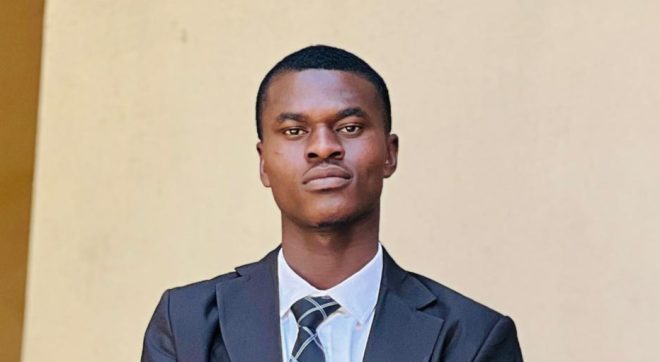
By: Agari Umar-Farouq Monday
INTRODUCTION:
On Wednesday, 11th of March, 2026, Iran’s Sports Minister announced that Iran would not participate in the 2026 FIFA World Cup, a tournament that will be hosted by the United States, Canada, and Mexico. The decision follows escalating military conflict between Iran and the United States and could have serious consequences for the tournament. Beyond football, it raises questions about international politics, sports governance, and how FIFA should respond.
THE CONFLICT BEHIND IRAN WITHDRAWAL:
On February 28, 2026, the United States and Israel reportedly carried out joint airstrikes on Iran. The strikes killed Iran’s Supreme Leader, Ayatollah Ali Khamenei, and triggered a major escalation in tensions.
Within the first twelve days of the conflict, more than 1,200 people were killed and over 12,000 were wounded. Iran responded with missile and drone attacks targeting Israel and several U.S. military bases in the Middle East. At this point, the two countries are effectively engaged in open hostilities. This conflict has now spilled into the world of football and its effect on the 2026 FIFA World Cup is inevitable.
IRAN’S POSITION ON THE 2026 FIFA WORLD CUP:
The 2026 FIFA World Cup will run from June 11 to July 19. Iran had already been placed in Group G, alongside Belgium, New Zealand, and Egypt.
All three of Iran’s group matches were scheduled to be played in the United States, two in Los Angeles and one in Seattle.
While FIFA President Gianni Infantino recently met with Donald Trump and stated that Iran would still be welcome to participate, though believing it is not appropriate they participate for their own safety and lives.
Iran’s Sports Minister, Ahmad Donyamali within hours after the announcement, went on national television and announced that the country would not attend the tournament, saying the safety of their players and citizens could not be guaranteed. According to him, the conditions necessary for participation simply do not exist.
WHAT IS THE LEGAL POSITION REGARDING A PARTICIPATING MEMBER ASSOCIATION WITHDRAWING FROM THE FIFA WORLD CUP?
FIFA regulations address situations where a qualified team withdraws from the World Cup.
Under Article 6.2 of the FIFA World Cup 2026 regulations, a country that withdraws more than 30 days before the tournament faces a minimum fine of CHF 250,000. If the withdrawal happens less than 30 days before the tournament begins, the fine increases to CHF 500,000.
In addition to the fine, Iran could be required to return the funds it received from FIFA to prepare for the tournament,estimated at about $10.5 million. There is also a possibility of exclusion from the 2030 World Cup.
WHO COULD REPLACE IRAN?
Another part of the regulations, Article 6.7, gives FIFA the authority to decide what happens next if a team withdraws. This includes the option of replacing the withdrawing country with another national team.
The most likely replacement would come from Asia, since Iran qualified through the Asian Football Confederation (AFC).
Two teams currently stand out as possible replacements:
Iraq, who recently defeated the UAE in a qualifying playoff and are set to play an intercontinental playoff against Bolivia or Suriname.
United Arab Emirates (UAE), who could become the next option if Iraq fail to qualify through that playoff.
Although FIFA has the power to select a replacement from any region, historically such decisions have been rare. The last time a team withdrew from the World Cup was 1950, and no replacement team was added at the time.
COULD IRAN AVOID THE FINE AND PENALTY?
Despite the rules on financial penalties, many believe FIFA may choose not to enforce them in this case.
A key legal concept called force majeure could apply. In law, Force majeure refers to extraordinary events beyond a party’s control that make it impossible to fulfill an obligation.
Given that Iran is currently involved in a military conflict with the main host nation of the tournament, this situation could reasonably qualify as force majeure. If FIFA accepts this argument, Iran might be exempted from paying fines or returning funds.
CONCLUSION:
Iran’s decision not to attend the 2026 World Cup highlights the complicated relationship between international politics and global sport. FIFA now faces a difficult task: deciding whether to penalise Iran, how to apply its regulations, and which team, if any, should take Iran’s place.
Whatever decision is made could set an important precedent for how football handles geopolitical crises in the future.
What is your view point on this?
Agari Umar-Farouq Monday is currently a 400-level Law Student at the Prestigious Faculty of Law, Bayero University, Kano, Nigeria. He’s a Sports and Tech Law Enthusiast and he passionately envisage the prospect of pursuing a career in Sports Law in the future. He can be contacted via WhatsApp on 09121925382 or Email at agariumarmonday247@gmail.com.
Well done man 👍🏽