
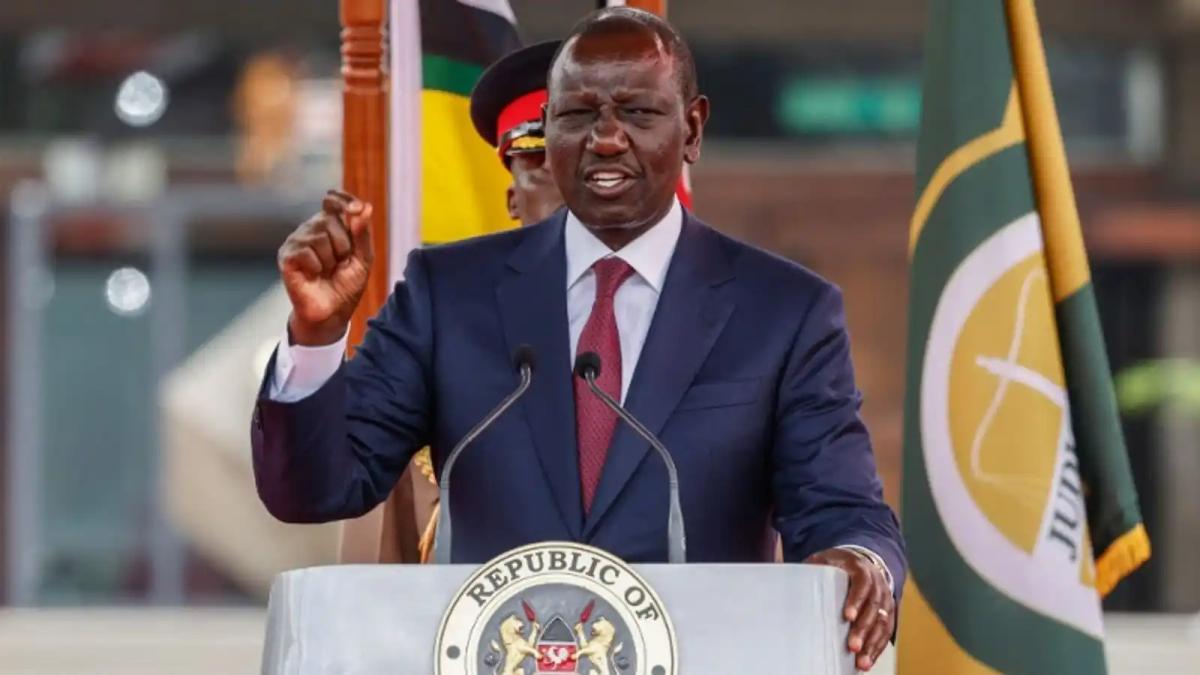
Kenyan President William Ruto has taken a jab at Nigeria while addressing recent remarks made by Bola Ahmed Tinubu regarding Kenya’s economic situation.
In a comment that has caught fire online, Ruto defended his nation’s standards and poked fun at the way Nigerians speak English. “Our education and English are quite strong. If you listen to a Nigerian speak English, you might find yourself in need of a translator,” he stated in a video that quickly went viral.
Ruto’s comments followed Tinubu’s statements made during his visit to Bayelsa State on April 10, where he compared Nigeria’s economic climate with that of other African nations, including Kenya, in response to concerns about soaring fuel prices. “I understand the economic issues; rising fuel prices are tough,” Tinubu acknowledged.
“However, let’s be grateful that we are better off than those in Kenya and other African countries,” he added.
Tinubu’s remarks sparked backlash from many Nigerians, who felt that the comparison did not accurately represent the country’s current economic struggles.
Former Labour Party presidential candidate Peter Obi criticized Tinubu’s stance, calling for attention to the real issues at hand. “Nigerians shouldn’t be consoled by comparisons that overlook their everyday battles,” Obi argued, cautioning against attempts to downplay the nation’s economic and security difficulties.
In a similar vein, former Vice President Atiku Abubakar described the comparison as misleading, pointing out that focusing only on fuel prices fails to provide a complete picture.
“It’s both puzzling and concerning that the President would use fuel prices as the sole measure of economic well-being while ignoring more pressing factors such as purchasing power and living costs,” he remarked.
Atiku also emphasized that while fuel prices in Nigeria might seem lower, the actual economic conditions present a different reality. “A Kenyan might earn more and pay more, while a Nigerian earns significantly less and struggles under intense economic pressure,” he explained.
He stressed that affordability should not be assessed based solely on price but by considering the balance between income and expenses. “By that standard, Nigerians have never faced a tougher situation,” he concluded.